Patrick of Ireland, Kwame Bediako, & Jonah of Saboba

st-patrick-writings_1394548218

While studying for an exam this afternoon I came across this quote from the late Professor Kwame Bediako, founder of the Akrofi-Christaller Institute of Theology, Mission and Culture (where I am currently studying).  It stirred something in me, so I decided to take a quick break and share it.  I hope it stirs you as well.

‘The great commission is not about numbers, nor statistics, the percentages of national populations that have been ‘reached’ or remain ‘unreached’ with the Gospel, important as these considerations are.  Our Lord did not say, ‘Go and make disciples of some people’ or even ‘of a large percentage of the nations’.  What he commanded was: ‘Go make the nations my disciples’.
 
The great commission is about the discipling of the nations, the conversion of the things that make people into nations — the shared processes of thinking, the common attitudes, world views, languages, cultural, social and economic habits of thought and behaviour and practice — all those things and the lives of the people in whom those things find expression — is meant to be within the call of discipleship, including nationality itself.’ 

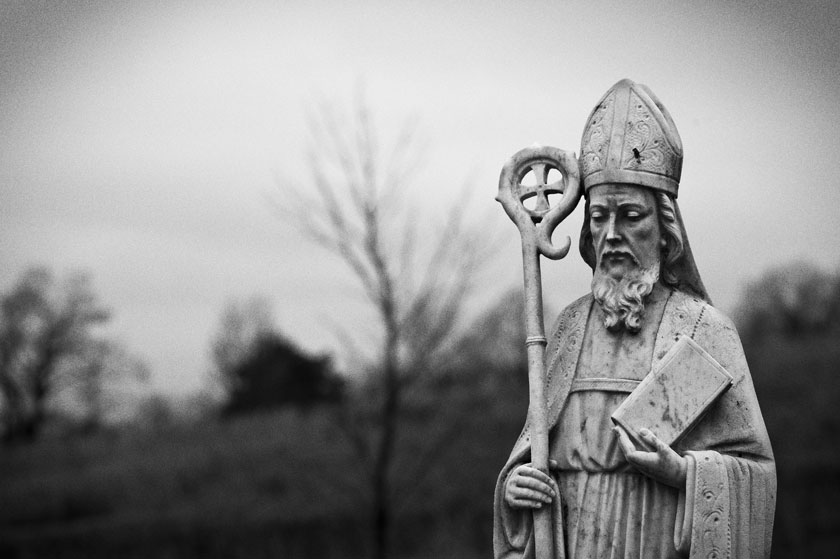
The transformation of the cultural elements Bediako mentions above has always happened in mission history through the committed discipleship of leaders — like Patrick of Ireland for instance, or Jonah of Saboba.   Patrick did not attempt to make the ‘pagan’ Irish into Roman Christians like him, he rather entered their Celtic world and introduced the person of Jesus as the fulfilment of what it meant to be Celtic.  The Irish were not proselytised, and they were not just evangelised.  They were discipled; the result of which was a new way of following Jesus unlike any the Roman world had ever seen or imagined:  Celtic Christianity.

Without Patrick’s great wisdom, and love for the Irish (who had even kidnapped and held him in slavery through his youth) the world would have missed out on one of the most vital, deep and rich, dynamic and enduring expressions of Christianity it has ever known.

Family Update (a bit overdue)

It really shouldn’t come as a surprise that it took our family almost seven months to settle into Ghana and begin to feel comfortable in these new surroundings.   But it did.  Perhaps because Carrie and I have each spent significant time in West Africa, and because we have fond memories of our four-month visit to Ghana in 2008 as a younger, smaller family, we figured our adjustment would be quick and painless.

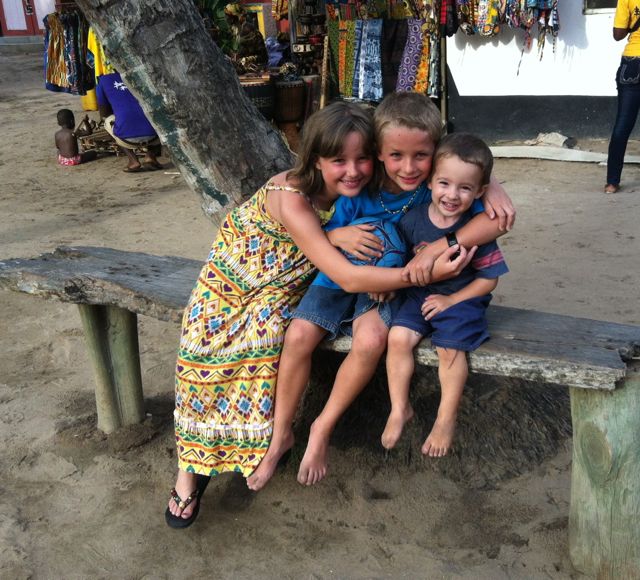
Nevertheless, seven months later we finally seem to be finding our stride.  Carrie is home-schooling Katie through fourth-grade, and John Mark is thoroughly enjoying first-grade at the Beacon School (a ministry of Youth With a Mission); he has a fun teacher, energetic friends and an hour of soccer every day.

Image

Image

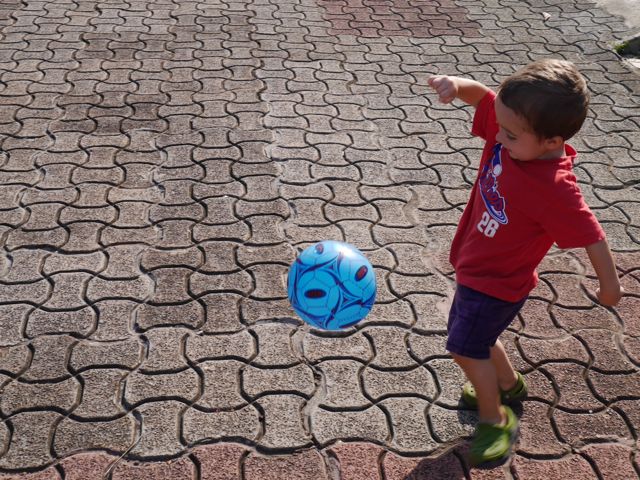
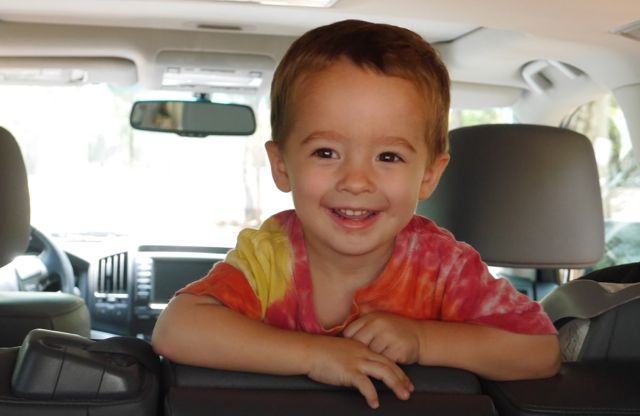
Timothy turned two in January and may be having more fun than any of us.  Ghanaians typically enjoy interacting and playing with young children so he always has someone around to sneak him a snack or kick the soccer ball.

Image

Image

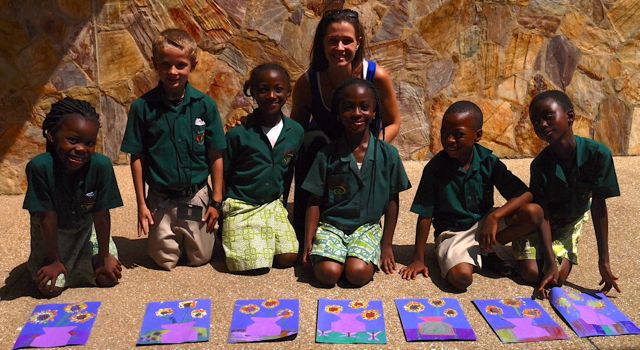
In addition to the mom-umental responsibilities of keeping house and home flowing in an African town, plus teaching Katie, tutoring John Mark, and caring for Timothy, Carrie is also voluntarily teaching an art class at the Beacon School which has been a fun and necessary creative outlet.

Image

Image

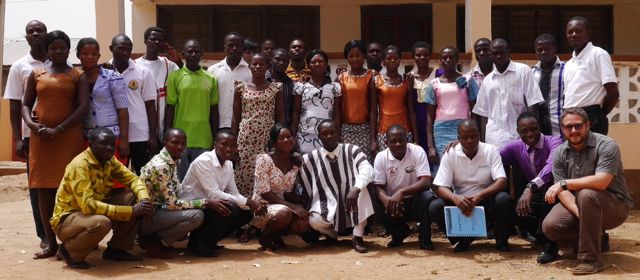
As for me, I am busy studying and writing for my masters program at Akrofi Christaller, traveling around Ghana with YLI coaches, and supporting the family any way possible.

Upcoming Family Plans

1.  From March 22-29, Katie and I will travel to Ghana’s Northern Region to visit our Coach Jonah in Saboba and join a gathering with Fulani people.  We will also visit four villages where we have built (or will build this year) clean water projects.  I’m very excited for Katie to travel with me around Ghana for the first time.

2.  Carrie’s parents are coming to visit us from April 8-19.  This is a huge treat for the kids, them, and us.

Some Prayer Requests

1.  Continuing challenges with electricity and water at our house, which is frustrating to say the least.

2.  The kids desire deeper friendships and social interactions.

3.  Rest!  We are very busy and do not always sleep well for a myriad of reasons.  Life is tiring right now.

4.  Safety as we travel on the roads here in Ghana.

5.  Health. We seem to have a revolving door at the local doctor’s office.  Each week we are dealing with some sort of ailment, sometimes food- or water-born, sometimes viral, usually mysterious.  We try to eat healthily, sleep well, protect against disease, and get exercise, but it does not seem to always work!

6.  That we will face all challenges in such a way that will help our family grow closer to each other.

7.  And finally, that as a family we will have a positive impact in our community in Akropong.

We really appreciate your prayer and support.

We can feel the love.  Thank you.

Ash, Carrie, Katie, John Mark and Timothy

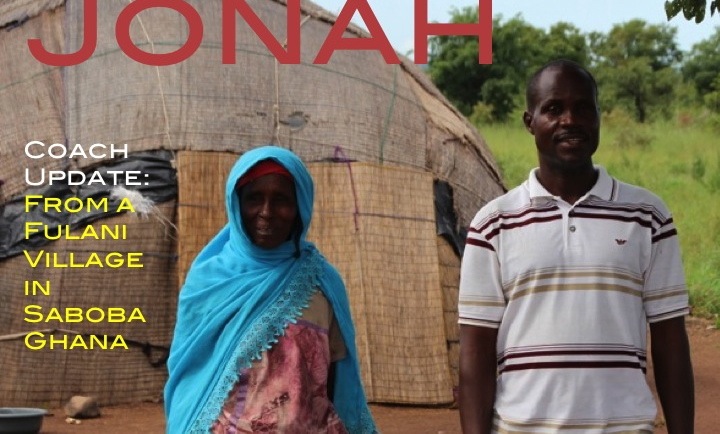
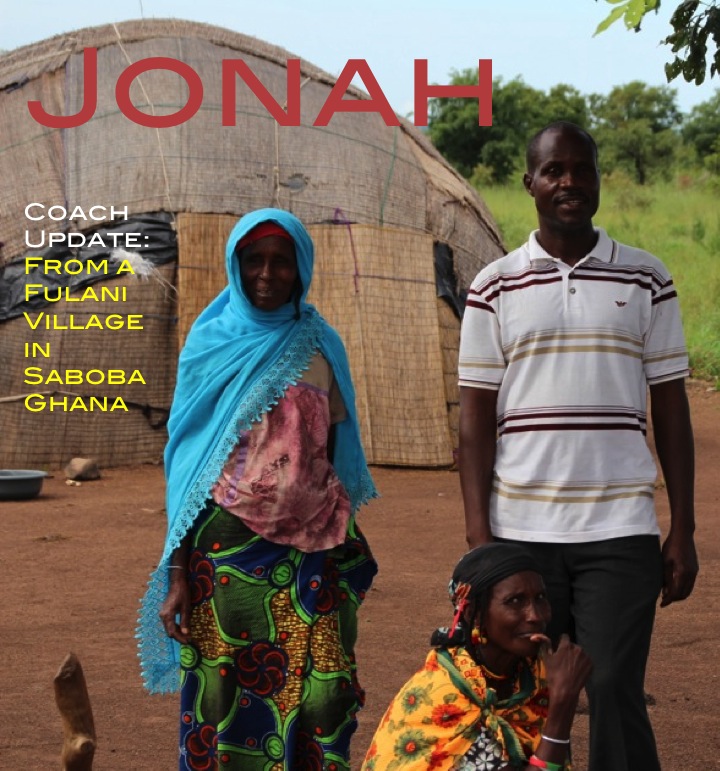
Jonah and our conversation with the Fulani


Slide1

Greetings from Ghana!  We’ve been back now for nine weeks which is hard to believe.

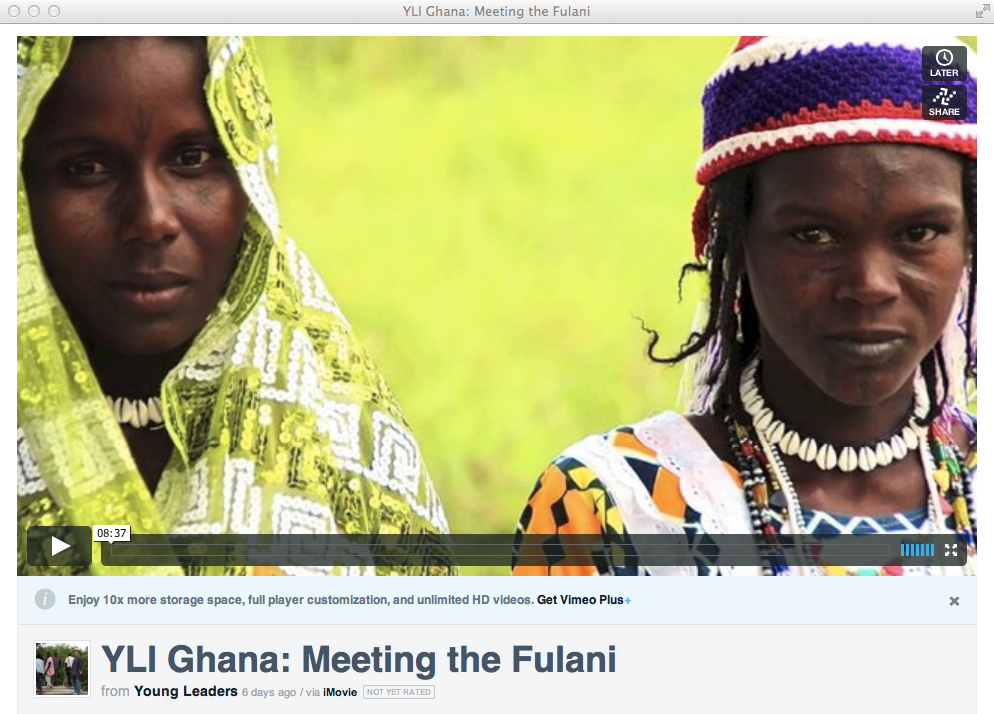
Recently my very good friend Jonah Manyan came down to Akropong for a visit so we could, among other things, talk about the work among the Fulani.  If you haven’t seen the short Fulani video, please watch it.

Jonah has been a YLI coach now for almost twelve years, and I’ve known him nearly that whole time, but he still amazes me with the wisdom by which he goes about making disciples.  The Fulani are an especially difficult culture in which to communicate the Gospel.  They have a New Testament and the Jesus Film in their language, but less than one tenth of one percent identify as Christians.  

The reasons I believe are as follows:  they are a closed culture, proud of their Muslim heritage, nomadic and geographically dispersed, and a reputation which motivates most people to leave them alone.

God however has brought Fulani people into our path over the last few years, so YLI coaches have been doing what YLI-trained leaders do: build relationships, love, proclaim Christ, love, focus on discipleship, and love.

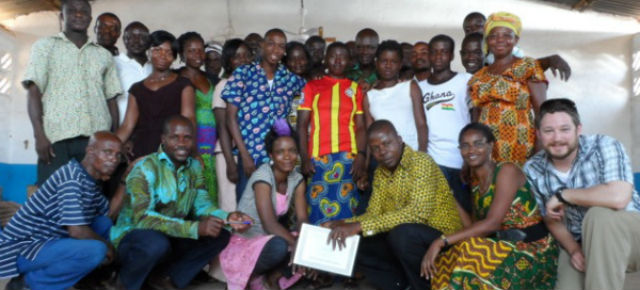
What does this look like?  Jonah told me about their most recent meeting: 100+ Fulani, along with the chief, showed up and packed their Local Council of Churches building.Here is what Jonah did:1.  Through the Bible, Jonah built a connection with the people showing how ‘people who care for livestock’ are important to God.  God came to Moses while he was tending livestock.  An angel appeared to shepherds so they could be some of the first to see Jesus.2.  He listened to concerns about their welfare.  Fulani children do not readily have access to school, and so their situation rarely improves.  One of the main reasons the Fulani came en masse to these first two meetings is that someone from the outside showed concern about their plight.  Jonah has made no promises to do anything for them–he doesn’t have the funding to do much of anything. But he cares, visits, listens and prays.

3.  When it was time for the Fulani to pray toward Mecca, they asked Jonah where they could go that would be acceptable for them to pray.  Jonah’s response: “Why not here in the building?” It surprised the Fulani that a Christian pastor would allow Muslims to pray to Allah in a Christian facility.  In addition to fulfilling their required prayer, they asked Jonah to pray to God for them.4.  At the end of the meeting, the Fulani chief announced to everyone in attendance that if Jonah continues to teach them about Jesus, by all means they will also eventually come to know the truth about God.I expect that this will not be quick work.  I would be shocked if anytime soon this Fulani community disassociates itself from Islam and starts building churches.  Yet I am very hopeful that the community will come to know God’s love, that they will know who Jesus is (not as doctrine, but as a person whose mission would fervently pursue the Fulani).And, very exciting for me, in three weeks, I hope to make the long journey to the next Fulani meeting in Saboba, joined by my nine-year-old daughter, Katie!In the meantime, please continue to pray.  For us, for Jonah, and for our Fulani friends.  As always, we are grateful for your vital prayer and financial partnership.Ash

Getting to know the Fulani people

YLI’s discipleship training doesn’t all happen in conferences.  It happens out where the people are.  YLI trained leaders have helped bring clean water to villages in northern Ghana over the past four years. These villages have in turn extended generosity and the message of the gospel to surrounding groups of people.  One such group is the Fulani, a nomadic Muslim people known for theft and violence.  But because of the love shown to them, some are beginning to come to Christ.  This is the story.

When Love Goes Viral

From the blog of YLI Ghana guest

How Love Went Viral in Kpenchila

“Before all this,” the elder said, waving his weathered hands to indicate the tin-roofed shelter, the makeshift school, the large brick reservoir, “We did not even consider ourselves human beings. Now, we consider ourselves to be human beings.” The people beneath the shelter seemed bright-eyed, healthy, even joyful. Dozens of kids for whom education was previously impossible are now learning their ABC’s. A little church meets under the shelter. And the whole village has ready access to clean drinking water. The community carries a sense of dignity and communal identity that I perceive did not exist a few years ago. “Not only are you human beings,” replied Ash quietly through the translator. “You are children of God.”


IMG_2949

So I was thinking… how does Young Leaders International, a tiny discipleship ministry focusing on a just 5 Ghanaian “coaches” bring clean water, spiritual transformation, and a communal sense of personhood to 3 villages in northern Ghana?

Here’s how I see it from an outsider’s perspective.

A few years ago, an American with a deep sense of God’s love came to Ghana to love young leaders. Not a lot of leaders. Just a few. He came without a lot of strategies and agendas, but a firm belief that love was the strongest stuff in the universe. It was a risky bet and not every leader received love. But a few did. They started visiting villages, praying for strangers in hospitals, showing practical love in their communities, and loving other young leaders.

When one coach visited a village and saw the cesspool that served as their water supply, his love made him cry. So YLI raised $12,000 and bought materials for a new water system designed by Ghanaians and built by the villagers. Then they did the same for 2 more villages. Their activity attracted other aid groups who built schools, clinics, even a playground! 

The village elders believe they received God’s love in a very tangible way and they want to share that love with others. So independently, they’ve planted churches and share their water with the Fulani tribesmen in their area: nomadic Muslim cattle-herders known for banditry, murder, and trampling crops with their herds. The village of Kpenchila says the love of Christ has helped them live at peace with their Muslim neighbors. One local Imam has even asked them to plant a church in his area, seeing the good the Christians are doing. 

I told one village how I learned about the Fulani in college and began to cry. God spoke to me then about His love for the Fulani and I began praying for them each day. Later I lived in a Fulani town in Guinea for a month. I knew I might see a few Fulani on this trip, but didn’t expect to see so many. Fulani settlements are interspersed between these 3 villages and I got to encourage them to keep loving the Fulani. I believe they will do just that. And if the nomadic Fulani receive God’s love, then… well I have my own ideas on that.

So that’s how love goes viral. Ash says, “I sometimes have my doubts, but one thing I’m always sure about is love.” Right.

Posted by a friend of YLI.

Naomi and the new life of Chief Nana Kofi Yeboah

naomi2

Naomi Awuni, one of our coaches, told me during my recent visit to Ghana that a chief named Nana Kofi Yeboah (whom I met a couple of times, most recently in November of last year) had recently died… Continue reading “Naomi and the new life of Chief Nana Kofi Yeboah”

The reason(s) we are moving to Ghana next month

Zook familyHave you known someone in a long-distance relationship? Or, have you seen a couple at a restaurant on their smart phones instead of interacting with each other?… Continue reading “The reason(s) we are moving to Ghana next month”

Yakubu’s death sparks renewal in Pulima

Pulima2

The young disciple Yakubu’s body was returned to his hometown of Pulima after he’d crashed in a ditch and been thrown from his motorbike. Yakubu was the only known Christian in the Muslim town of Pulima, in Ghana’s upper-west region, with a population of around a thousand people.,,Continue reading “Yakubu’s death sparks renewal in Pulima”